

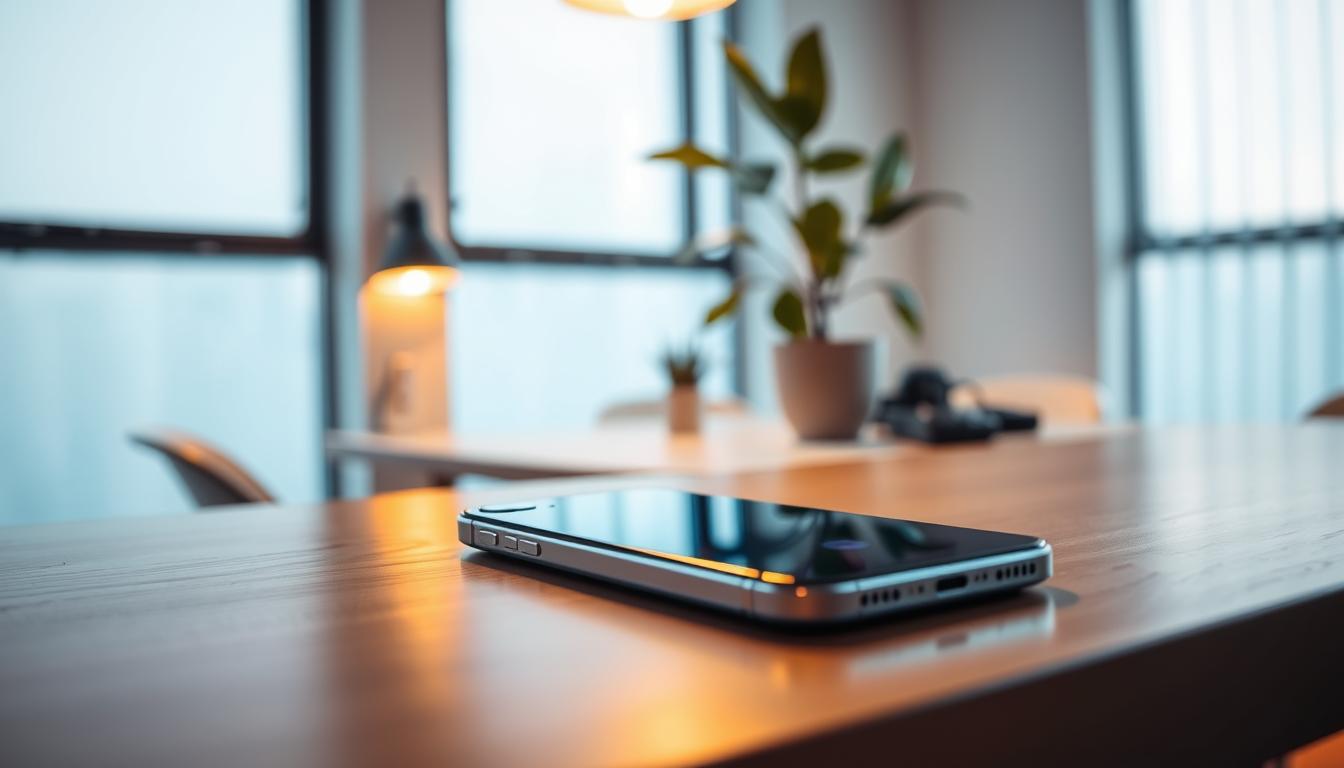
The Apple iPhone 17 is here, ready to take over from the iPhone 16. It's designed to be the top choice for premium phones. It brings together tighter hardware and software, perfect for users in the US and worldwide.

Apple has made big changes for the iPhone 17. It's great for power users, photographers, gamers, and professionals. You'll see a sleek design, faster performance, better cameras, and new iOS features.
This article will explore the iPhone 17's design, display, and camera upgrades. We'll also look at its chipset, speed, and iOS features. Plus, we'll talk about pricing, availability, and how it compares to other top phones.
Key Takeaways
- Apple iPhone 17 is the successor to the iPhone 16, focusing on tighter hardware-software integration.
- The next-gen iPhone targets power users, creators, and professionals seeking top-tier performance.
- Expect notable camera, display, and chipset upgrades alongside expanded iOS features.
- Coverage includes MagSafe and connectivity improvements tied to real-world use.
- The article will compare pricing, availability, and sustainability efforts across models.
What’s New in the iPhone 17: Highlights and Quick Overview
The iPhone 17 focuses on making daily use better. It has new style, performance, and software upgrades. These changes are important for both new and long-time Apple users.
Design refresh includes a slimmer bezel and a cleaner camera housing. This makes the phone stable when flat. The standard models use aerospace-grade aluminum, while Pro variants use surgical-grade stainless steel.
New ceramic and reinforced glass backs are scratch-resistant. They also make wireless charging more efficient.
Ergonomics have small but key improvements. The edges are slightly curved, and the finishes are textured. This makes the phone easier to hold without adding bulk.
Weight and thickness have been adjusted for balance. They are not drastically changed.
Design refresh and build materials
The new design has a narrower bezel and a cleaner camera array. The materials are chosen for durability and a premium feel. They also resist fingerprints and help with heat dissipation.
The button layout and frame contours have been tweaked. This makes holding the phone more secure. These changes focus on comfort, resilience, and polish for everyday use.
Major hardware upgrades
A new system-on-chip boosts CPU, GPU, and neural engine speeds. Photographers will see better image quality and faster processing.
Memory and storage have been increased. The base storage has gone up, and there are higher options for power users. The battery capacity has also increased, with better thermal designs for sustained performance.
Software features and iOS enhancements
iOS 17 brings better battery life and faster performance. It includes new camera modes and pro tools for creatives. These tools have tailored controls and faster export times.
Privacy and security have been improved. Biometric checks and on-device data protections are stronger. The phone also works better with Macs, iPads, and Apple Watch through iCloud, Apple Fitness+, and Continuity.
iPhone 17: Detailed Design and Display Innovations
The iPhone 17 introduces new design and screen tech to enhance daily use. This section explores size options, ergonomics, screen advancements, and Apple's balance of durability and repairability. Discover the details that matter when using or repairing the device.
Form factor and fit. The iPhone 17 comes in three sizes: standard, Pro, and Pro Max. Each size has a thinner bezel and adjusted length and weight for easier use. The buttons are now slightly lower, making them easier to reach on larger models. These changes improve comfort and show the iPhone 17's ergonomic differences.
Tactile feedback and controls. The controls have been updated for better feel. The Taptic Engine offers clearer haptics for alerts and actions. The mute switch is now firmer and easier to use. Case makers should note the new design and button spacing for compatible accessories.
Accessibility and accessories. Apple has made the iPhone 17 easier to hold and use, even for those with smaller hands. The design fits well in cases and mounts without adding bulk. These changes make the iPhone 17 more comfortable to use and support a wide range of accessories.
Display technology and resolution. The Pro models have advanced OLED or micro‑LED screens with better color and brightness. They also have adaptive LTPO technology for smoother scrolling and power saving. HDR10 and Dolby Vision support ensures true-to-source media playback.
Pixel density varies by model to keep text sharp. The screens are also easier to see outdoors thanks to stronger coatings and brightness. True Tone adjusts white balance for consistent color and less eye strain.
Durability and water resistance. The iPhone 17 aims for an IP68 rating with better dust and water sealing. New glass from Corning or similar suppliers is more scratch and crack resistant. The frame is also reinforced to resist bending on larger models, adding to the iPhone 17's durability.
Repairability and serviceability. Apple has expanded authorized repair options and continued work on Self Service Repair parts and manuals. Key parts like the battery and display are still replaceable, but with fewer barriers. This shows Apple's focus on making repairs easier while keeping the device waterproof.
| Feature | Standard | Pro | Pro Max |
|---|---|---|---|
| Approx. Size (in) | 6.1 × 2.9 | 6.1 × 2.8 | 6.7 × 3.1 |
| Display Type | OLED, 60–90Hz | Micro‑LED/OLED, up to 120Hz | Micro‑LED/OLED, up to 120Hz |
| Pixel Density | ~460 ppi | ~500 ppi | ~480 ppi |
| Peak Brightness | 1,000 nits | 1,600 nits | 1,600 nits |
| Water Resistance | IP68 | IP68+ | IP68+ |
| Repairability Notes | Modular display, authorized parts | Improved access, Apple Self Service Repair support | Improved access, Apple Self Service Repair support |
| Ergonomics | Balanced weight, reachable buttons | Refined contours, stronger haptics | Optimized grip, extended reach aids |
| Durability Enhancements | Hardened glass, reinforced frame | Advanced glass, internal bracing | Advanced glass, reinforced chassis |
Performance: Chipset, Memory, and Speed Improvements
The iPhone 17 focuses on speed and usability. Tests show it's faster in CPU, GPU, and neural processing. This makes demanding apps run smoothly without overheating or draining the battery.
New processor architecture and benchmarks
Apple's new silicon boosts single-core and multi-core performance. Benchmarks show big gains in single-core scores and multi-core performance. The GPU handles heavy games and AR better, and the neural engine speeds up machine learning tasks.
The chip stays cool during long use, avoiding slowdowns. This means gaming and video editing stay smooth. Real-world tests show the iPhone 17 handles demanding apps well.
RAM, storage options, and real-world multitasking
Higher-end iPhone 17 models have more RAM for pros. This makes switching apps and keeping projects open longer. Even lower models have enough RAM for common multitasking.
Storage starts larger on base models, great for 4K shooters. Pro models offer even more for 8K workflows. Daily use shows fast app switching and smoother games.
| Metric | Base Model | Pro Model | Pro Max Model |
|---|---|---|---|
| CPU Single-Core % Gain | 18% | 22% | 22% |
| GPU Uplift (avg) | 25% | 35% | 38% |
| Neural Engine Speedup | 2x | 2.5x | 2.5x |
| RAM | 8 GB | 12 GB | 16 GB |
| Base Storage | 256 GB | 512 GB | 1 TB |
| Sustained Load Behavior | Stable | Very stable | Very stable |
Battery life and power efficiency
The iPhone 17 has better battery life and power efficiency. Its new chipset and display controls use less power. This means longer video and web browsing times without losing performance.
Fast charging is still supported, and the phone saves power in the background. These changes help the iPhone 17 battery handle high loads without shortening daily use.
Camera System and Imaging Capabilities
The iPhone 17 camera system is designed for pro-level results but is easy to use for everyday photos. It combines hardware and software to improve dynamic range and low-light shots. This makes video editing smoother for both creators and casual users.

Main cameras and sensor upgrades
Apple has improved the wide, ultra-wide, and telephoto sensors. They now capture more light with larger pixels and wider apertures. Sensor-shift stabilization and fast autofocus help reduce blur.
Pro models have a special telephoto lens for longer zooms. This is great for portraits and distant shots without losing detail.
Night mode, computational photography, and video features
The neural engine enhances HDR and tone mapping. Night mode captures more texture and detail with less noise. It also takes shorter shots for handheld photos.
ProRAW keeps tonal control for editors. Smart HDR improves highlights and shadows naturally.
Video gets big upgrades for creators. Better stabilization and new codecs support higher resolutions. Cinematic mode tracks subjects better, and ProRes workflows are faster for editing.
Front-facing camera and Face ID improvements
The front camera now has a higher-resolution sensor and better low-light performance. This means sharper selfies and clearer video calls. It also supports wider group selfies and better Face ID recognition, even with masks.
The iPhone 17 camera system offers great balance. Daylight shots are sharp, night scenes are atmospheric, and video tools are professional-grade. Yet, it's still easy to use for everyday photos.
Connectivity, 5G, and Wireless Features
The iPhone 17 offers top-notch wireless upgrades. These aim to make your daily connections faster and more reliable. You'll see better network handoffs, smarter carrier switching, and tighter Apple service integration for calls, streaming, and location tools.
5G performance and carrier compatibility
The iPhone 17 5G supports more bands for better global use. U.S. models get stronger mmWave support for fast speeds in cities. Sub-6 GHz boosts average speeds overseas for consistent performance.
Latency drops make real-time gaming and cloud streaming smoother. Carriers like Verizon, AT&T, and T‑Mobile offer advanced VoLTE and private 5G services. eSIM and dual-SIM improvements make network switching easier while traveling.
Wi‑Fi, Bluetooth, and Ultra Wideband updates
iPhone 17 Wi‑Fi 6E boosts local network speeds and reduces congestion. This means faster downloads and less lag during video calls and games.
Bluetooth gets codec and stability upgrades for clearer audio and reliable multi-device pairing. New platform-level sharing makes switching wireless headphones or speakers easier.
Apple improved Ultra Wideband for better spatial awareness. This enhances Find My accuracy for AirTag users and improves Handoff between Apple devices.
Charging options and MagSafe ecosystem
Wired charging keeps up with faster USB standards while wireless charging reduces heat. A possible move to USB-C aligns the iPhone 17 with common accessories and faster charging.
iPhone 17 MagSafe has stronger magnets and quicker magnetic charging with certified accessories. Third-party wallets, mounts, and power banks use the revised magnetic array for secure attachments.
Battery health tools now manage charging patterns more intelligently. This extends battery life. Smart charging learns your daily routines to limit full charge time and reduce wear.
User Experience: iOS Updates and New Software Tools
The iPhone 17 changes how we interact every day. It combines hardware and software to make tasks like photo editing and calling better. Even small updates make the phone feel quicker and more personal.
Key iOS features exclusive to the iPhone 17
On-device AI makes photo processing faster and offers smarter suggestions in Photos and Camera. It unlocks special camera modes and advanced photo features that pros will love.
Privacy gets a boost with per-app sensor permissions and new Siri voice processing. Customizable widgets and a fresh home-screen layout make the most of the display and new gestures.
Usability tweaks and accessibility improvements
Gesture improvements make navigation quicker. A customizable Control Center gives easy access to tools. One-handed modes and adaptive layouts are great for bigger phones.
Apple has expanded VoiceOver and added Live Captions for calls and media. There's also better hearing aid compatibility and new assistive touch options. These features make the iPhone 17 more accessible to more people.
Battery and performance modes learn your habits. They let you set detailed limits for power and data. This helps extend battery life while keeping performance up when you need it.
App ecosystem and optimized experiences
Big apps from Adobe and Microsoft will use new APIs for AR, ML, and photography. Game engines will get a boost from the upgraded neural engine for better visuals and smoother play.
Streaming and social apps will support higher-resolution capture and playback. Continuity across macOS, iPadOS, and watchOS will make workflows better for creators and professionals.
iPhone 17 software, iPhone 17 iOS features, iPhone 17 accessibility, and iPhone 17 apps come together for a better user experience. The goal is to make the device more powerful and easier to use.
Pricing, Models, and Availability
The iPhone 17 line offers choices for those who want value and features. Here's a quick guide to the differences between the basic iPhone 17 and the Pro models. You'll also learn about colors, storage, release timing, and carrier offers.
Base vs Pro/Max
The standard iPhone 17 is for everyday users. It has durable materials, a high-quality OLED display, and a dual-camera system. It also has solid battery life.
The Pro and Pro Max models offer more. They have stainless steel, higher refresh-rate displays, and stronger peak brightness. They also have upgraded cameras and larger batteries for longer use.
Choose the standard model for a good price and portability. Go for Pro or Pro Max for better photography, brighter displays, and longer battery life.
iPhone 17 models and pricing overview
| Model | Key differences | Typical starter storage | Expected iPhone 17 price (U.S.) |
|---|---|---|---|
| iPhone 17 | Aluminum frame, dual cameras, 60–90Hz display | 128GB | $799–$899 |
| iPhone 17 Pro | Stainless steel, triple cameras, 120Hz ProMotion | 256GB | $999–$1,199 |
| iPhone 17 Pro Max | Larger battery, top-tier camera sensors, highest brightness | 256GB | $1,099–$1,399 |
iPhone 17 colors and storage tiers
Apple separates colors by model. The base iPhone 17 has classic finishes, while Pro models have premium shades. Storage starts at 128GB, with 256GB and 512GB common. The Pro models also offer 1TB for video enthusiasts.
Choose higher storage for 4K video or large media libraries. Use cloud backup and offload tools to save money on storage you won't use.
Pre-order, availability, and carrier offers
Apple usually announces the iPhone 17 in early September. Pre-orders start the following week, with shipments within ten days. The U.S. gets the first shipments, followed by a global rollout.
Carriers like Verizon, AT&T, and T‑Mobile offer deals at launch. Compare these to find the best deal on your iPhone 17.
Practical tips for launch day
- Set up an account with Apple and your carrier before pre-order to speed up checkout.
- Confirm your model and storage to avoid delays in pre-order fulfillment.
- Check trade-in quotes and consider AppleCare+ to get warranty coverage.
Sustainability, Repairability, and Environmental Impact
The iPhone 17 is a big step for Apple's green goals. It uses recycled materials and is made to last longer. Apple has added more recycled aluminum and rare earth elements to the phone's frame. It also uses recycled tin in solder.
Packaging is now less plastic and more recyclable fibers. This helps reduce waste during shipping and display. These changes aim to make the iPhone 17 more sustainable and lessen mining impacts.

Apple Trade In and in-store recycling keep old phones from landfills. The trade-in program gives credits for old devices. Apple recycling gets valuable metals and parts for new phones.
Apple wants to be clear about where materials come from. This helps lower the environmental impact of raw materials.
Apple makes it easier to fix your iPhone 17. You can replace batteries, displays, and more. This means you don't have to buy a new phone as often.
Apple's Self Service Repair and authorized service providers help. They make fixing your phone simpler. This extends your phone's life and reduces waste.
Battery replacement policies and AppleCare+ affect repair costs. Independent repair shops are also an option, but availability varies. More access to parts and repair guides means your phone can last longer.
The new SoC and display use less power. This lowers daily energy use. Apple aims to be carbon neutral across products and supply chains.
Apple invests in renewable energy for making products. This reduces emissions and the carbon footprint of products. These efforts help Apple's environmental impact.
Users can help by recycling old phones and choosing battery replacements. These actions support iPhone 17 sustainability. They also encourage a market that values repair and longer device lifespans.
How the iPhone 17 Compares to Competitors
The iPhone 17 faces tough competition from Samsung, Google, and OnePlus. This comparison looks at display quality, cameras, battery life, software, and ecosystem value. It helps readers choose between platforms.
Comparison with flagship Android phones
Samsung Galaxy S and Fold phones offer advanced foldable displays and high refresh rates. Pixel flagships lead in computational photography and pure Android features. OnePlus models focus on fast wired charging and great value.
Apple stands out with tight hardware-software integration, consistent updates, and strong resale value. For many, the iPhone 17 wins with smoother app performance and on-device machine learning. This is key for tasks like image processing and privacy controls.
Trade-in value and upgrade incentives
Apple's trade-in offers are competitive with carrier and retailer programs. A well-kept iPhone usually holds its value better than many Androids. This makes owning an iPhone more cost-effective in the long run.
Carriers and retailers offer promotions, financing, and trade-in credits to lower costs. To get the best trade-in value, sell or trade near the iPhone 17's launch. Keep the device in good condition and back up your data before switching.
Which user should choose the iPhone 17?
Photographers and video creators will love the iPhone 17's ProRes workflows and color accuracy. Professionals who value iOS continuity and long software support will find it reliable for years.
Casual users looking for a future-proof phone with easy resale value and strong privacy will prefer the iPhone 17. Those who want deep customization, prefer native USB-C ecosystems, or seek foldable hardware might choose Android instead.
When deciding between iPhone 17 and Android, think about your budget, feature needs, and current device ecosystem. Use an iPhone 17 comparison of trade-in offers and carrier deals to find the best smartphone 2025 for your needs.
Conclusion
The iPhone 17 brings many improvements. It has a sleeker design, brighter screens, and a faster processor. The camera also gets a big upgrade.
These changes make using your phone smoother. The new display and battery life work well together. Plus, iOS updates make everything run faster.
If you love taking photos, want better battery life, or need a top-notch display, this phone is for you. The base model is great for everyday use. But, the Pro versions offer even more with their high refresh rates and extra storage.
When you buy, think about what you need most. This way, you can find the perfect iPhone 17 for you.
Prices and when you can buy it vary. Check out deals from Apple, Verizon, AT&T, and T-Mobile. They can help you save money. Also, consider the phone's eco-friendliness and how easy it is to repair.
Before you buy, think about what's most important to you. Compare trade-in offers and look at carrier deals or Apple's website. This will help you choose the right iPhone 17 for your needs.
FAQ
What is the iPhone 17 and how does it fit into Apple's lineup?
The iPhone 17 is Apple’s latest top phone. It's the next step after the iPhone 16 series. It's made for power users, photographers, gamers, and professionals who need top-notch mobile features.

Google Pixel 9a Review: A Budget Phone That Outperforms $1000 Flagships (2025)